Casino Imagery in Popular Culture: From Secret Rooms to Resort Spectacle
Casino imagery in popular culture: compare dated film and resort-ad examples, separate promotion from venue records, and keep claims about Đồng Tháp precise.
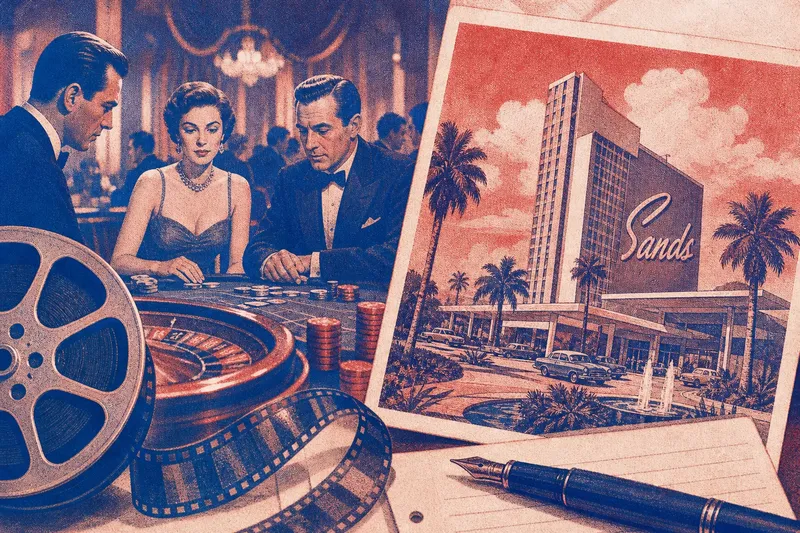
Casino imagery in popular culture can make a guarded gaming room and a glittering resort look like successive stages of history. To support that comparison, name dated works and describe what each source can actually establish.
Which dated examples support the comparison?
Two identifiable examples offer a useful contrast: the 1950 film The Las Vegas Story, directed by Robert Stevenson, and a 1955 advertisement for the Sands Hotel in Las Vegas reproduced in the University of Nevada, Las Vegas Libraries’ digital collections. The film is fiction; the advertisement is promotional material. Neither is a neutral record of how every casino operated.
In The Las Vegas Story, casino interiors contribute to a fictional story of glamour and danger. The Sands advertisement presents a named resort to prospective visitors. The comparison is therefore between a film’s dramatic setting and a business’s public pitch—not evidence that secret rooms gave way to resorts in a single historical shift.
When you use these items, identify the film by title, director, and release year, and identify the advertisement by its venue, date, and archival collection. Check the catalog entry or item record before describing details that are not visible in the source you consult.
What does each source let you claim?
A fictional film can support claims about how filmmakers represented casino spaces. It cannot establish admission rules or daily operations at a real venue. An advertisement documents the message a business chose to present; by itself, it does not confirm that every promoted amenity was available as shown or explain who used it.
Keep observation separate from interpretation. “The advertisement names the Sands Hotel and promotes a resort visit” describes its content. “The resort was open to everyone” is a claim about access that needs a different source, such as records that directly document admission.
Also distinguish the source’s place from the place you are studying. These examples concern Las Vegas, so they can illustrate broader casino imagery but cannot establish casino history in Đồng Tháp.
How can you compare the images without overstating the past?
Use a compact evidence record for each item:
- Identity: If a title, creator, venue, or archival record identifies the item, cite those details; if identity is uncertain, describe the item without assigning it to a named work or place.
- Date: If the film or item record supplies a date, use that date; if it does not, mark the date unknown and do not place the item in a chronological sequence.
- Source type: If the item is fiction, use it to discuss representation; if it is an advertisement, describe the message as promotion rather than proof of delivered service.
- Setting: If the source names a venue or location, record it; if it does not, leave the setting unidentified rather than inferring one from appearance.
- Visible details: If a feature such as a gaming table, stage, or entrance is plainly present, describe it; if it is unclear, omit it or qualify the description.
- Access: If the source states an entry rule, report that wording; if it says nothing about entry, make no claim about who could enter.
- Local connection: If a source has identifiable ties to Đồng Tháp, explain them; if it comes from elsewhere, frame it only as a wider cultural comparison.
For each comparison, write one sentence about what the items show and a separate sentence about what they cannot prove.
How do you build a supported comparison?
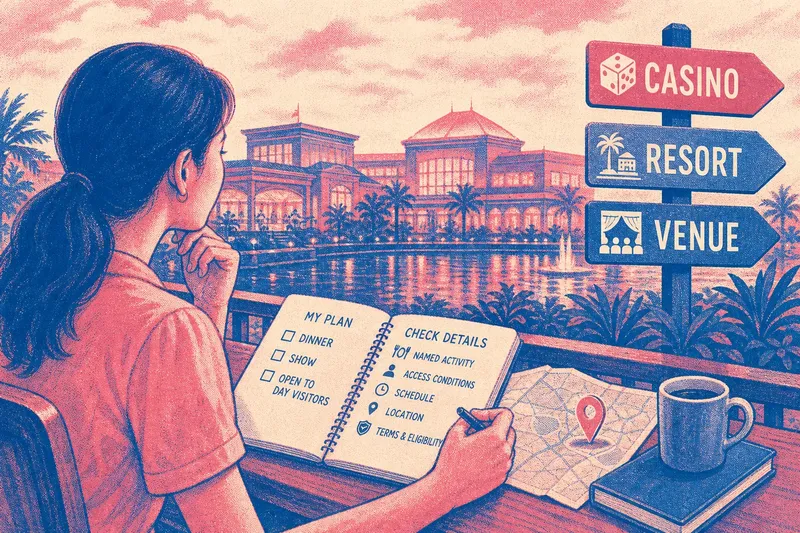
- Identify both items. Write down each title or description, creator or venue when known, date, and collection or publication. If a detail is missing, mark it unknown.
- Classify each source. Label it as fiction, advertisement, venue record, news report, or another source type. Let that classification shape the claims you make.
- Record observable details. Note only words and features you can point to in the source, such as a named resort, a gaming table, or a dramatic entrance.
- Compare the purpose and presentation. Ask what the film’s story needs and what the advertisement wants a prospective visitor to notice.
- Limit the historical claim. State what these particular items suggest about representation, then name what more direct evidence would be needed to describe venue practice or local history.
Say you are preparing a short comparison using the 1950 film and the 1955 Sands advertisement. You record the film as fiction and the advertisement as resort promotion, then note the dramatic casino setting in the film and the named resort in the advertisement. Your supported result is that these two dated works present casino spaces for different purposes; they do not demonstrate a general transition from secret rooms to resort spectacle or describe casino activity in Đồng Tháp.
What local evidence would connect the topic to Đồng Tháp?
Look for material with a clear provincial connection: a locally situated newspaper notice, an official document, a photograph with identifiable context, or an oral history whose provenance is clear. Record what the source is before using it to make a claim about leisure or a particular venue.
A local account of an entertainment event may document leisure without mentioning a casino. A film set in another place can show casino imagery without saying anything about Đồng Tháp. Keep those subjects distinct unless a source directly links them.
If the material you locate does not document a casino or a specific practice, narrow the claim to what it does document. The absence of evidence in the sources consulted does not establish that an activity never occurred.
What can casino imagery establish?
Does a film scene show how a real casino worked?
It shows how filmmakers represented a casino for a story, not how a specific venue operated. Use records tied to the place and period for claims about real practice.
Does a resort advertisement prove every service was available?
No. It records what a business promoted to an audience. Treat claims about actual services or visitors as unconfirmed unless another source documents them.
Can Las Vegas examples establish casino history in Đồng Tháp?
No. The 1950 film and 1955 Sands advertisement provide a comparison of wider cultural imagery, not evidence of provincial venue history. For claims about Đồng Tháp, use sources with an identifiable local connection.
How should an undated image be used?
Describe its visible content and mark its date as unknown. Do not use it to support a chronological claim until a reliable item record or other evidence dates it.
What makes the comparison useful?
A useful account names its examples, dates them, identifies whether they are fiction or promotion, and keeps observation apart from inference. The contrast between The Las Vegas Story and the Sands advertisement can show different ways casino spaces were presented; it cannot stand in for a documented history of changing venue practice.
Use the phrase casino imagery in popular culture for a precise claim: these dated Las Vegas examples present casino settings through fiction and resort advertising, while local claims about Đồng Tháp require locally connected evidence. That distinction lets a reader see both the value and the limits of the comparison.